

BLACK & VEATCH
From ignored to indispensable: Rebuilding trust in IT

Facing widespread disengagement, Black & Veatch rebuilt trust in IT—turning a function employees avoided into one that could lead the firm’s digital future.

Employees migrated to Teams in under 8 weeks

Faster rollout than projected

Incident rate; best tech rollout in client history
THE CHALLENGE
A credibility problem
When the new Chief Technology Officer at Black & Veatch stepped into her role, she wasn’t there to run IT. She was there to transform it: from a support function into a driver of growth and client success.
The firm was betting its future on digital. Not just internally, but in how it showed up to clients. Technology would shape how the firm innovated and delivered for clients.
But IT had a credibility problem.
Years of outsourcing, uneven rollouts, and a poor help desk experience had eroded trust. Employees worked around IT rather than with it. At one point, 70–75% of IT’s emails were filtered into spam.

Which raised a hard question: how could IT help lead the firm’s digital future if the organization was tuning it out? The answer was clear and uncomfortable. The team expected to lead this shift wasn’t trusted inside the business. Before IT could help clients navigate disruption, it had to rebuild its credibility at home.
The CTO partnered with Strategy Muse to take that on at its root. To change how the firm showed up externally with clients, they first had to change how IT was experienced internally.
KEY SERVICES

Our work with Strategy Muse made people take notice and engage with IT differently. It gave us a springboard to do the more advanced work I knew we were capable of.
Chief Technology Officer
THE APPROACH
Making IT worth listening to
The first hurdle was simple but daunting: getting employees to pay attention.
Rather than relying on traditional communications, we helped IT launch focused micro-campaigns to change how employees experienced technology rollouts.
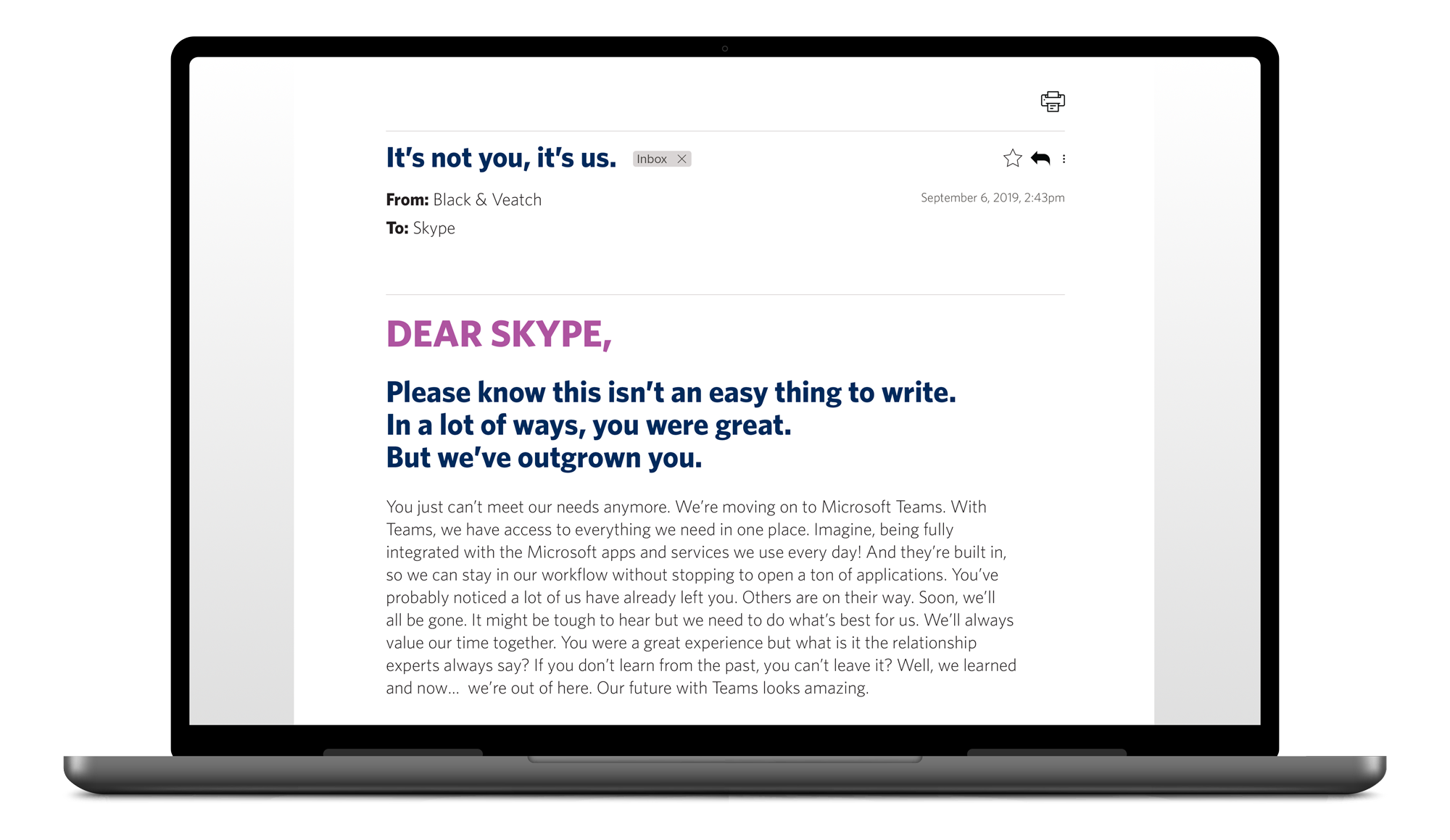
The first effort supported the transition from Skype to Microsoft Teams. Instead of a standard rollout, we introduced a bold, human-centered campaign framed as a relationship breakup.
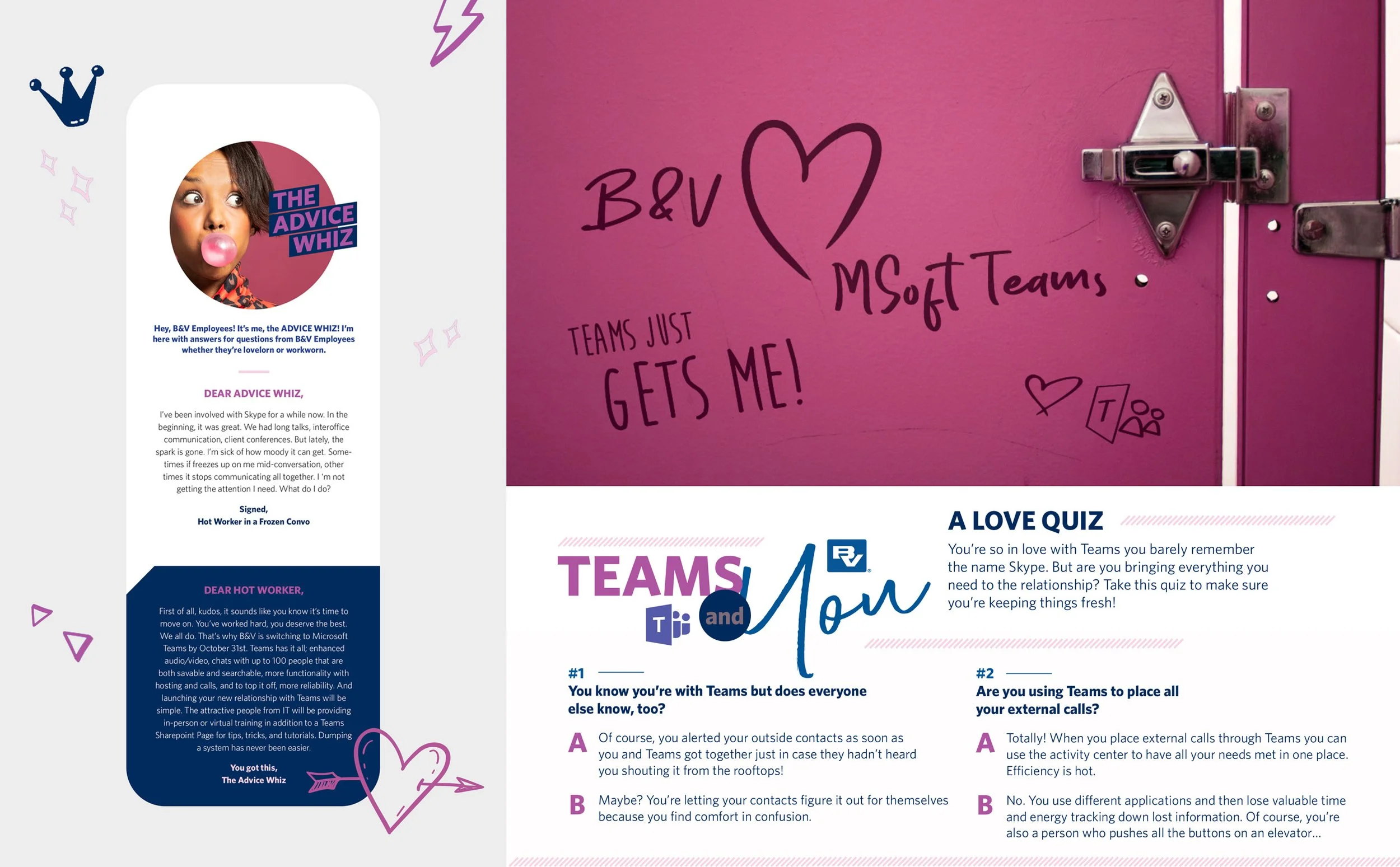
Employees received a playful “Dear John” letter. Posters, memes, and office graphics reinforced the message. Training became “relationship counseling.” An advice column answered questions, and a “Love Quiz” tested Teams knowledge. Even bathroom stall clings delivered reminders—capturing a “captive audience.”
Behind the creativity was disciplined execution. We worked with IT leaders to:
Conduct stakeholder analysis
Define required adoption behaviors
Align the rollout to the ADKAR change model
Mobilize a global network of change champions—“relationship counselors”—to drive local adoption
The campaign did more than introduce a tool. It introduced a new IT. For the first time in years, employees were paying attention.

THE RESULTS
No more filtering, a lot more engaging
The impact was immediate. The “Dear John” message became one of the top three most viewed intranet stories of the year—unprecedented for IT. More importantly, the rollout delivered on results and a positive employee experience.
10K
Employees across 100 offices migrated to Teams in under 8 weeks
50%
Faster rollout than projected; generating ~$200,000 in savings
2.5%
Incident rate; best tech rollout in client history
92%
Felt informed ahead of migration
82%
Used provided training materials
99%
Knew how to schedule meetings and calls
THE TAKEAWAY
Engagement is a relationship
Before IT could lead transformation, it had to rebuild trust with an organization that had learned to tune it out. By meeting employees in ways that felt relevant and human, the team transformed how employees experienced IT—and built IT’s credibility to lead the firm’s digital future.
With renewed trust, IT repositioned itself as a credible partner. That foundation enabled more ambitious initiatives, including advanced analytics, digital twins, and smart infrastructure solutions.

